Almanac
Everything you need to know about your ONS pressure cooker.
What is Pressure Cooking?
Regular open-pot cooking is carried out at sea level at 100°C (212°F), which is the boiling temperature of water, which generates steam. By confining the steam inside a pot, pressure cooking raises the boiling point of water and, consequently, the cooking temperature by causing a safe, controlled rise in pressure. Through permeating the food, the steam preserves nutrients, color, texture, and fluids while also tenderizing and flavoring it while speeding up the cooking process. Using a pressure of 15 pounds per square inch (psi), or 1 kilogram per square centimeter, the ONS Pressure Cooker cooks food at 121 degrees Celsius (250 degrees Fahrenheit).
The Benefits of Pressure Cooking
Compared to standard cooking periods, ONS pressure cooking can cut them in half. Low-cost goods like tough pieces of meat and legumes (lentils, dried peas, and beans) may be cooked to perfection in a fraction of the time it would normally take. With a pressure cooker, you save money by using less fuel because food cooks more quickly. There is scientific evidence that pressure cooking preserves several nutrients, including proteins and vitamins. Low-calorie, low-fat cooking is best done via steaming. Food prepared under pressure is more sanitary due to the greater temperature. Cooking food in a closed environment with extremely hot steam may enhance its inherent flavors and yield delectable outcomes. You may use your ONS to prepare a variety of dishes, whether they are whole meals or components of recipes.
Advantages of ONS
Safe
- Pressure-locked Safety Lid. Similar to a contemporary airplane door, the cooker’s lid is pressure-locked when there is pressure within. Before the pressure drops to a safe level, it cannot be opened.
- Automatic Safety Valve is placed so that, when it works, the food and steam are securely sent downward.
Better Pressure Regulation
- New Improved Pressure Regulator/Vent Weight better controls pressure, cooks more quickly, uses less fuel, is simpler to install and uninstall, and decreases the growth of dal. Except for Stainless Steel and Big PEXA, this is available in all ONS variants.
Trouble-Free
- Longer Lasting Sealing Ring/Gasket. Because the lid fits from the inside, opening and closing the pressure cooker does not rub the sealing ring sideways. Additionally, the lid’s rim protects the sealing ring from the food acids in the pressure cooker.
- Rust Proof Components. To prevent corrosion, the ONS Pressure Cooker has handle brackets and a unique metal alloy handle bar.
Important Safeguards
- Prior to usage, read all directions.
- Refrain from touching hot surfaces. Put handles to use.
- The use of the pressure cooker in close proximity to youngsters requires close monitoring.
- The pressure cooker should not be placed in a hot oven.
- Avoid using a dishwasher for laundry.
- Shifting a pressure cooker that contains hot liquids requires the utmost caution.
- Only use the pressure cooker as directed.
- Pressure is used to cook in this gadget. Scalding injuries can develop from improper usage. Before you start using the device, make sure it is properly closed. Learn “How to Close and Open the ONS” underneath “Operating Instructions”.
- Prior to shutting the lid for pressure cooking, make sure the safety valve, vent tube, and vent weight are clear (not clogged) at all times.
- While cooking, never put anything on top of the vent weight.
- Do not place the vent weight or other pressure control device on the vent tube when you begin pressure cooking. Only once the steam begins to flow consistently out of the vent tube should you place the vent weight on it. Observe “Trial Run” in “Operating Instructions”.
- Prior to pressure cooking, always fill the pressure cooker body with water as indicated by the instructions. Pressure cookers of a 1.5- to 3-liter capacity should generally have at least 1 cup (240 ml) of water for the first 10 minutes of pressure cooking and a half cup (120 ml) for each further 10 minutes, or a portion of that amount. In pressure cookers with a capacity of 3.5 to 6 liters, add at least 1.5 cups (360 ml) of water for the first 10 minutes of the cooking process and another half cup (120 ml) for each additional 10 minutes, or a portion of that amount. Use at least two cups (480 ml) of water for the first ten minutes of pressure cooking and half a cup (120 ml) for each further ten minutes, or a portion of that amount, when using pressure cookers with capacities ranging from 6.5 to 12 liters.
- The unit shouldn’t be more than two thirds filled. Avoid filling the unit more than half full when cooking items that expand while cooking, including rice or dry vegetables. Make sure the cooker is never more than one-third full when cooking sprouting dal or beans. There’s a chance that overfilling might block the vent tube and result in excessive pressure. Refer to “Food Preparation” beneath “Operating Instructions”.
- Note that the pressure release mechanism (vent tube) may get clogged by foods that foam, froth, and splutter, such as applesauce, cranberries, pearl barley, oatmeal or other cereals, split peas, noodles, macaroni, rhubarb, or spaghetti. Cooking these meals in a pressure cooker is not recommended.
- To prevent the entire liquid that produces the steam from evaporating, reduce the heat after the standard operating pressure is attained.
- The pressure cooker should not be opened by force. Wait until the pressure cooker has cooled and the internal pressure has decreased before opening it. The cooker is still under pressure if the handles on the body and lid are hard to push apart. Do not force it open. The cooker may be dangerous at any pressure. Find “Releasing Pressure” inside “Cooking Tips” within “Operating Instructions”.
- When dealing with liquid or frothy meals, never raise the vent weight to lower the pressure.
- Avoid using a pressure cooker for oil pressure cooking.
- Because the metal may weaken to a dangerous degree, never use the cooker body for deep frying, light frying, or as an oven for dry heating or baking for longer than 20 minutes at a time.
- Verify that the handles are secure. Before using, please tighten the same if it is discovered to be loose. (See “Product Information” for discussion of the “play” on the ONS lid handle bar.)
- It is necessary to employ an authentic ONS safety valve in place of a fused safety valve. The safety valve should be replaced after a year of regular usage.
- An authorized service center or agent is required to do all repairs except replacing the gasket, body handle, safety valve, and vent weight. Genuine ONS parts are required for all replacements.
Basic Product Information for ONS Pressure Cookers
Every pressure cooker’s listed volume is when the lid is closed. A pressure cooker’s cooking capacity is smaller than its whole volume. No more than two-thirds of the pressure cooker’s body should ever be filled. This is to ensure that the steam vent or tube doesn’t get blocked and to provide the steam ample room to circulate. Dishes that expand while cooking, including rice and lentils, as well as soups and other liquid dishes, should not be filled to more than half of the cooker body’s capacity. Tuvar and moong are examples of sprouting daals that shouldn’t be filled to more than one-third of the cooker’s capacity. Approximately 13½ cups (3.2 liters) make up two thirds of the 5 liter (5½ quarts) ONS, 10 cups (2.4 liters) make up half, and 6½ cups (1.6 liters) make up one third.
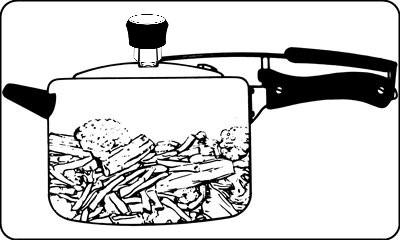
CAPACITY FOR SOLID FOODS: TWO-THIRDS FULL
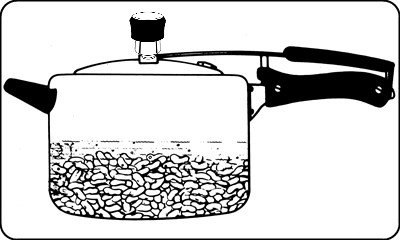
CAPACITY FOR LIQUID OR FROTHING FOODS: HALF FULL
About 15 pounds per square inch (1 kg per square cm) of cooking pressure is automatically maintained by the pressure regulator. On the steam vent, the pressure regulator must be positioned and forced into place. There is a faint click that signifies the pressure regulator is in the proper position when it is pressed down on the steam vent.
Inserting the Pressure Regulator / Vent Weight on the ONS Pressure Cooker
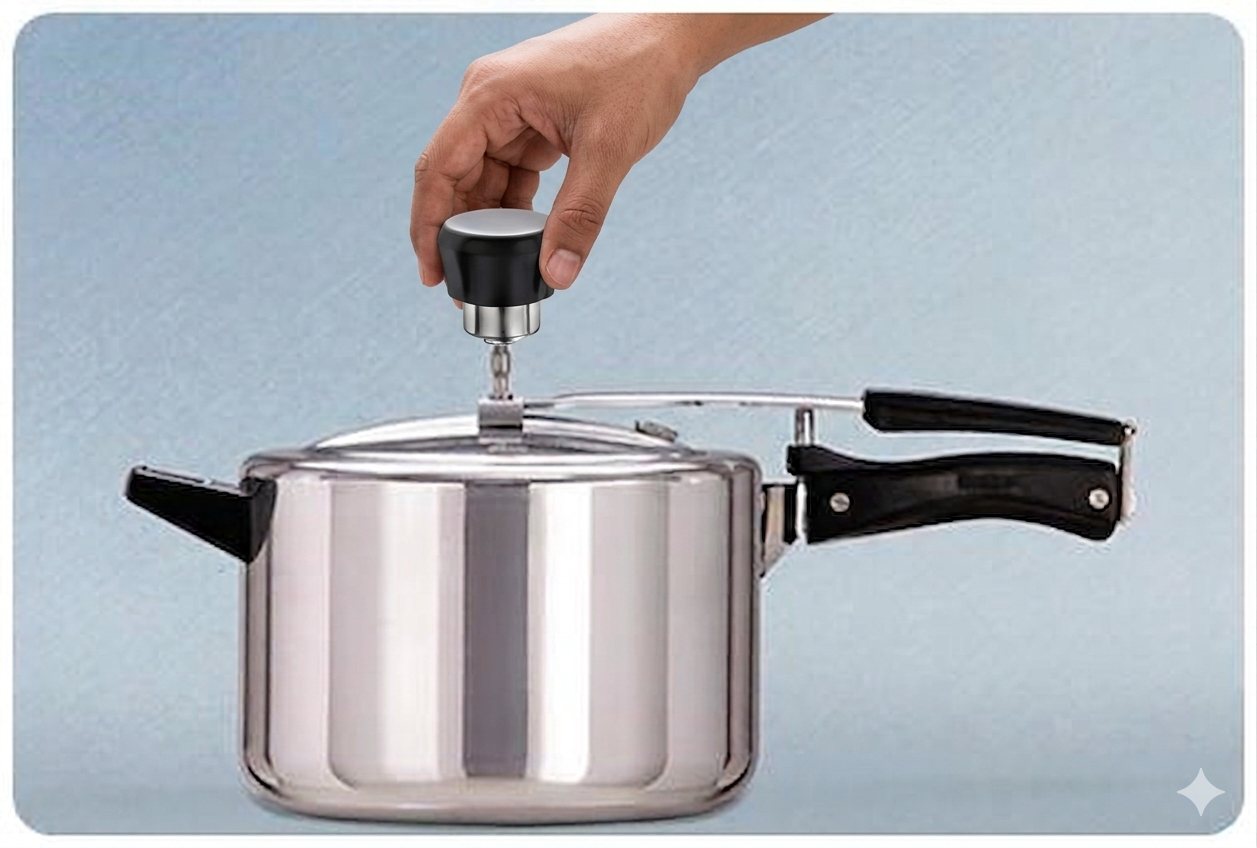
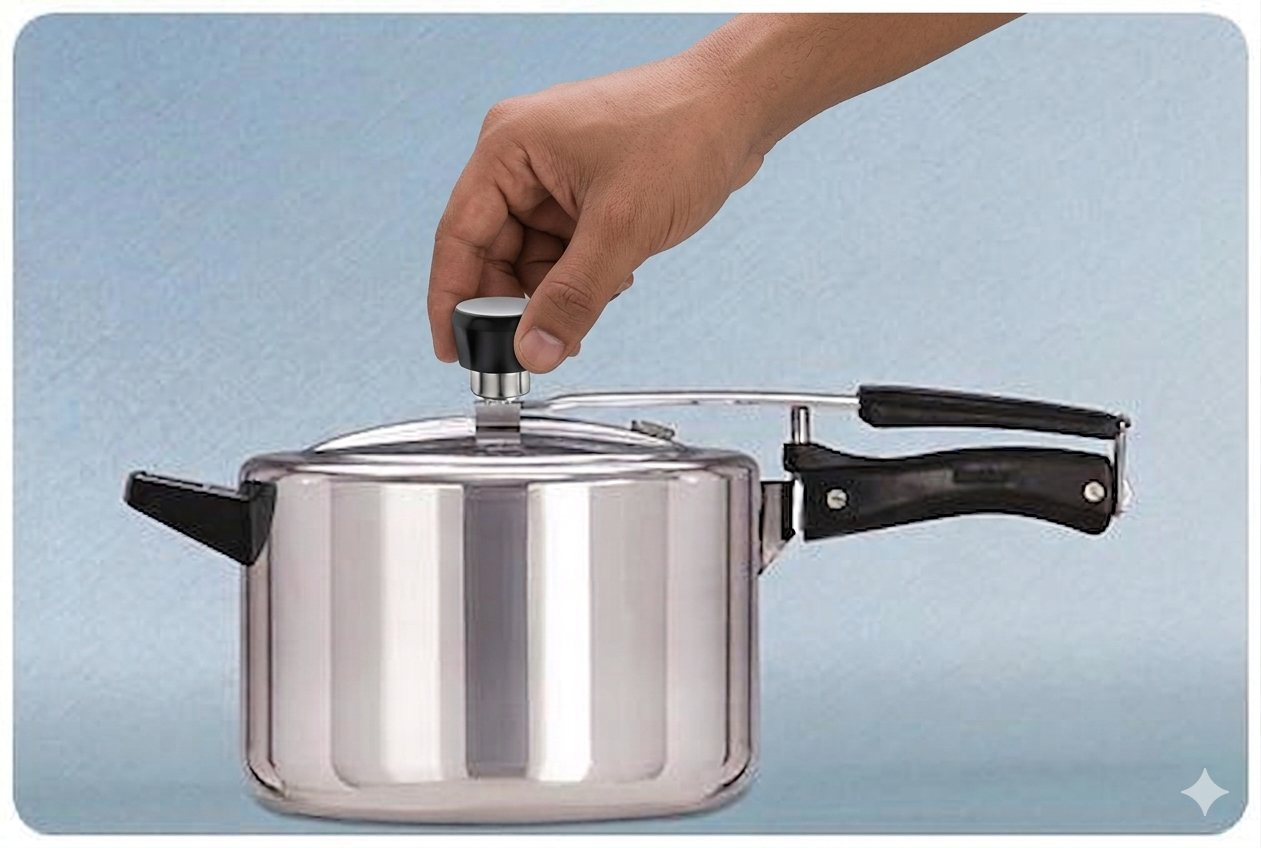
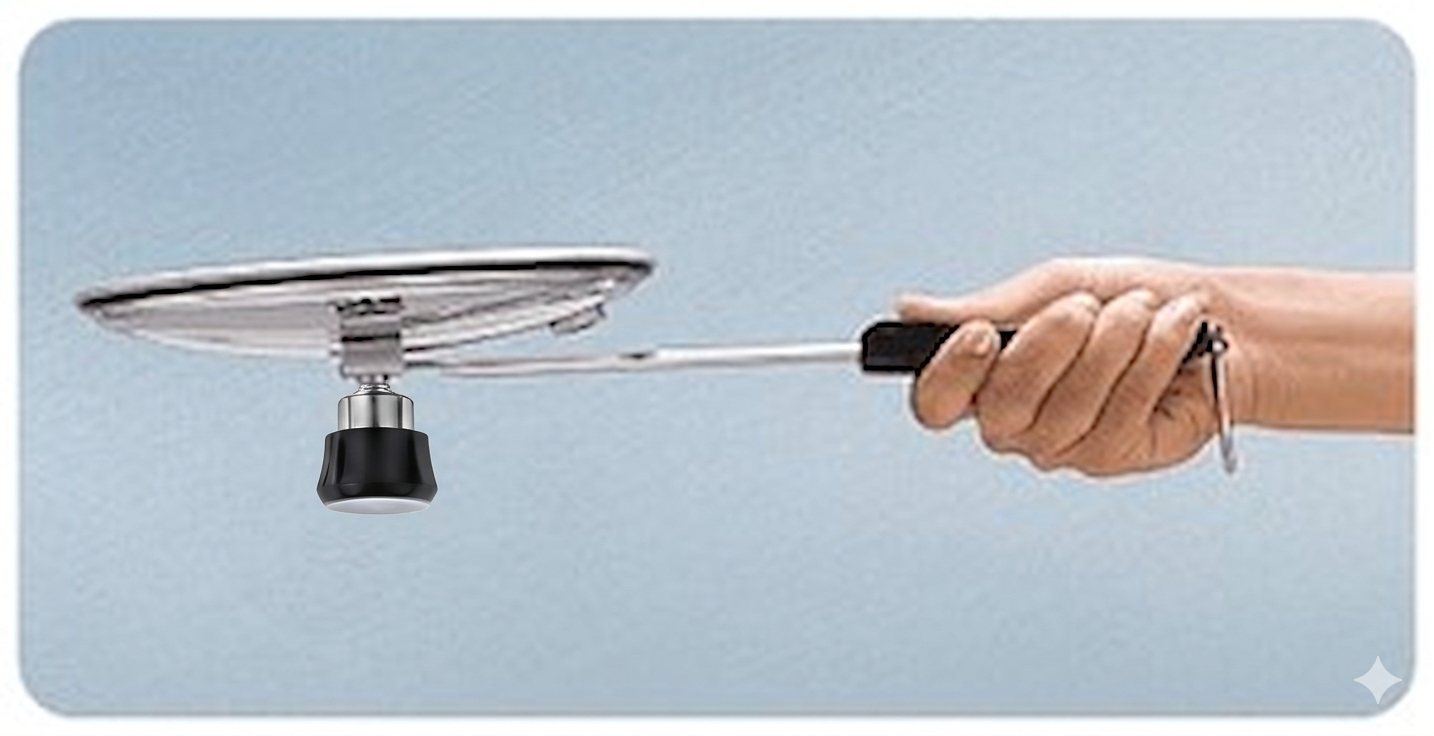
A robust spring mechanism secures the pressure regulator to the steam vent and keeps it from toppling over in the event that the lid is inverted.
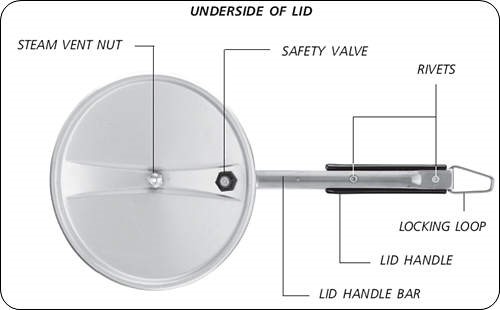
The steam vent nut fastens the steam vent to the underside of the lid. With seven holes, the ONS steam vent nut allows steam to escape even if some of the holes are clogged. Maintain a clean steam vent at all times, and examine it before each usage.
Should the steam’s regular exit be obstructed, the safety valve will activate. In the event that the pressure cooker boils dry due to a shortage of water, the safety valve will also activate, raising the temperature over the typical working range. At the proper temperature, the fusible alloy in the safety valve melts and releases pressure. Here is an example of how to replace the safety valve.
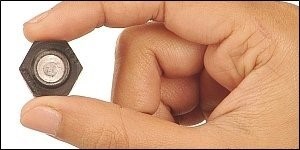
FUSIBLE ALLOY
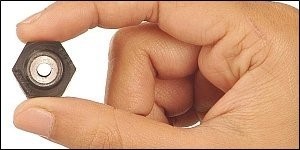
WHICH MELTS WHEN REQUIRED
Due to the handle bar’s attachment to the lid, there is additional room for intentional “play” or movement. This guarantees improved lid-to-cooker body sealing.
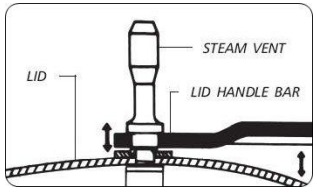
MOVEMENT OF ONS LID HANDLE BAR: SIDE VIEW
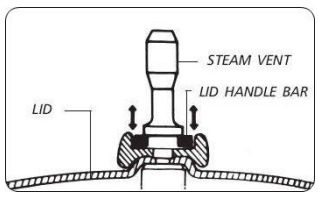
MOVEMENT OF ONS LID HANDLE BAR: FRONT VIEW
In addition to housing the pressure regulator, the steam vent serves as an exit for surplus steam. The lid handle is attached to the lid near the steam vent.
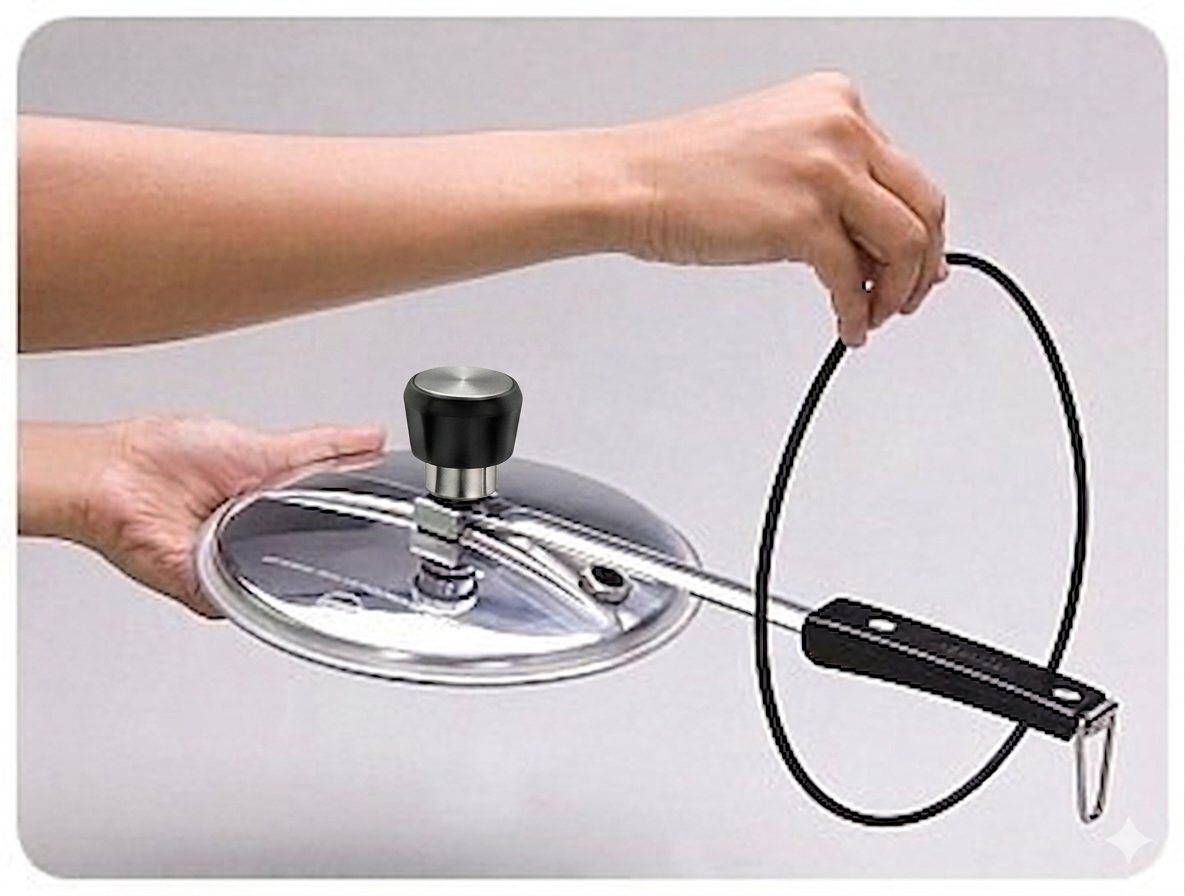
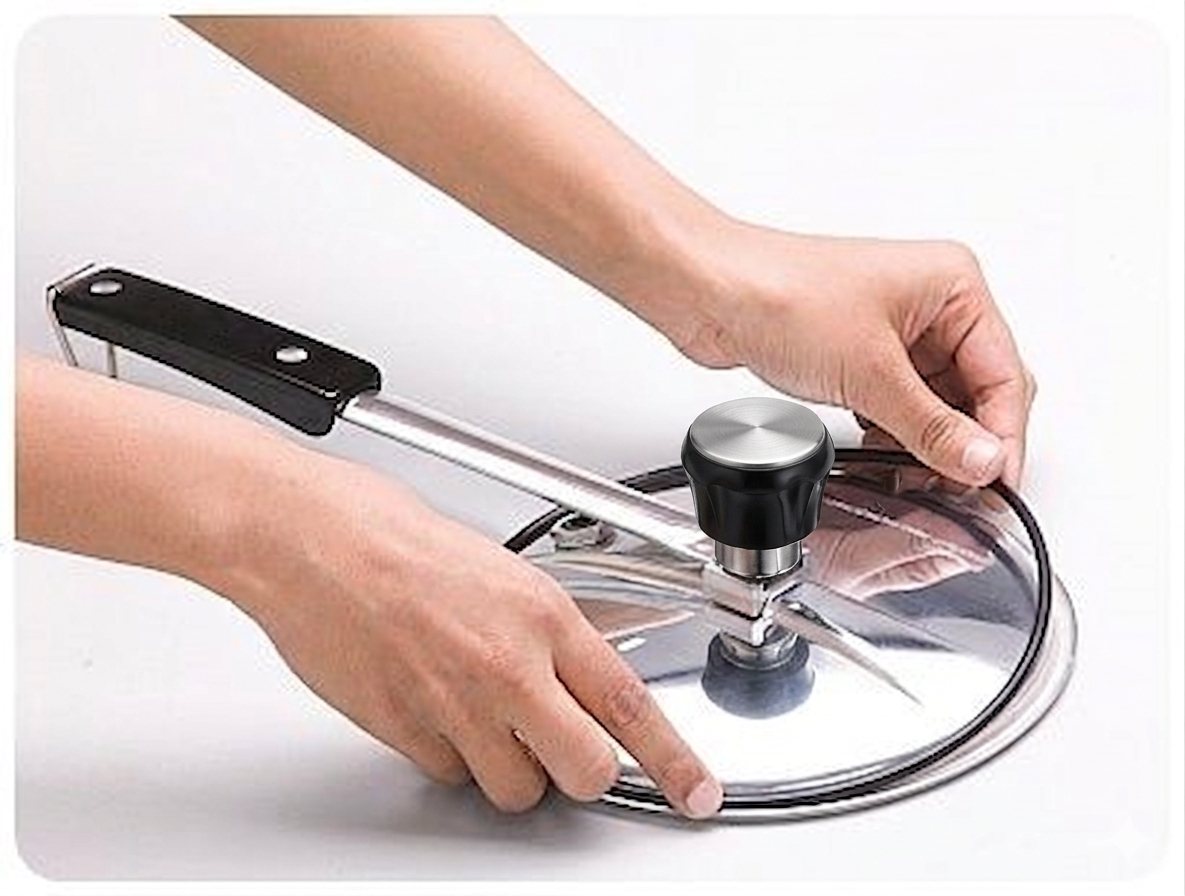
Together with the removable rubber sealing ring, the lid is assembled. Using your fingertips, you may extract it from the lid curl. To replace the sealing ring, simply slide the lid handle through it, then press and smooth it down along the lid curl until it sits correctly.
Easy Tips for Better Cooking
Before using your ONS pressure cooker to cook, read this section after you have done reading Trial Run Before Cooking.
Size
The cooking time is determined by the size of each food item, not by the overall amount. For uniform cooking, chop food into uniform pieces.
Combining Foods
- By keeping them physically apart and not combining them in the same liquid, ingredients that need about the same amount of cooking time can be cooked together without blending their flavors.
- Using the following methods, ingredients with varying cooking periods can be prepared together:
- To shorten cooking time, break food into smaller pieces and soak lentils, beans, and grains beforehand.
- By chopping food into bigger pieces and covering with foil, you may reduce the cooking time.
- Begin with items that take longer to cook, pause the pressure cooker to add ingredients that cook faster, and then finish the pressure cooking process.
Adapting Your Own Recipes
Pressure cooking is appropriate for the majority of dishes that may be prepared using moist heat, such as stews, braises, steams, and boils.
This website’s recipes serve as illustrations of how to use the ONS Pressure Cooker properly. Look for a recipe that is comparable to yours and employ procedures, amounts of food and water, and cooking times that are generally the same.
A common guideline is to pressure cook for one-third the typical cooking time and then check the food for doneness if there isn’t a comparable recipe to match for timing. Reclose the pressure cooker and continue cooking for a reasonable period of time if the food is undercooked.
Pressure cooking typically requires reducing the amount of liquid because there is less evaporation, making sure there is always adequate liquid for the whole cooking period.
Use caution while seasoning because pressure cooking preserves flavors. After pressure cooking, taste and adjust the seasoning if necessary.
When pressure cooked in the cooker’s base, milk, cream, and yogurt often curdle and foam, therefore they should usually be added to recipes after the pressure cooking process is over.
Heat Source
Both kerosene and gas burners may be used with the ONS pressure cooker. You may also use the ONS Induction Disc Base pressure cookers on an electric hot plate. All home gas, electric, halogen, ceramic, and induction cooktops may be used with the ONS stainless steel and tri-ply pressure cookers, particularly the 3 and 5 liter models.
Make sure the burner is the right size for the cooker because gas flames shouldn’t lick the sides.
As long as it is not in close proximity to hot coals, the cooker may be used on both coal and wood fires. WARNING: THE METAL MAY BE DAMAGED BY DIRECT CONTACT WITH HOT COALS. A minimum of 1 inch (2.5 cm) should separate the cooker’s base from the blazing coals. Avoid using more heat than what is typically seen in home stoves when using commercial burners or makeshift flames. On an industrial burner, the ONS pressure cooker (with the exception of the Big Pexa) must not be used.
Legumes and other foods that may sprout should be cooked on medium heat with the cooker up to full operational pressure. Once the pressure is reached, lower the heat. In the event that the steam appears to be escaping too forcefully, turn the cooker off for a moment.
Frying Prior to Pressure Cooking
Prior to pressure cooking, several recipes call for light frying. Without the cover, you may fry or brown in a little quantity of butter, oil, or other fat in the pressure cooker body.
In addition to improving the food’s look and flavor, browning beef and poultry before pressure cooking helps to retain the liquids. Browning is optional for pressure cooking and can be skipped if you like to reduce the extra fat and/or save time.
To maintain the oil temperature high and ensure that the food is seared but not cooked, brown the food in tiny batches. Evenly brown each side.
Before adding liquid to the cooker, take the cooker body off of the heat after frying.
An aluminum or anodized aluminum pressure cooker’s body must not be used for deep-frying, which uses more than ¼ cup of oil, or for frying for longer than 20 minutes at a time. With the ONS Stainless Steel or TRI-PLY pressure cooker body, you may deep-fry for extended lengths of time.
Pressure-frying in a pressure cooker is not advised. It is made to run exclusively on liquid that generates steam.
Water
In order to generate steam during the pressure cooking process and avoid burning, the pressure cooker has to contain an adequate amount of water (or stock, juice, vinegar, beer, or wine). Steam is not produced by lipids or oils. Inadequate water amounts might result in a botched recipe, the need to repair a safety valve, or both.
One cup of cooking liquid is needed for the first ten minutes of pressure cooking, plus an additional ¼ cup for each further ten minutes, or a portion of that amount. If you lower the heat after the cooker has achieved full operational pressure, this amount will keep it from boiling dry.
Since it may weaken the metal, the pressure cooker should never be used as an oven for baking or dry heating.
Timing
As soon as the pressure cooker reaches its maximum operating pressure, begin timing recipes. Utilize a watch or clock or a kitchen timer. For pressure cooking to be effective, timing is crucial. You might get the wrong amount of time to cook a certain dish or recipe if you count whistles. Timing mistakes have more serious repercussions for pressure cooking since it happens considerably faster than traditional cooking.
It’s possible that you can finish cooking without using pressure if the meal is only somewhat undercooked. Foods that are prone to overcooking are particularly well suited for this technique. Determine how many minutes the food needs to be cooked under pressure, make sure there is enough cooking liquid for the extra time, return the cooker to full working pressure, and cook for the extra time.
Our recipes provide approximate cooking times. Depending on the ingredients’ age, softness, and variety as well as your preferred level of cooking, more or less time may be required. You’ll be able to modify the timings appropriately with experience.
The phrase “Pressure Cooking Time 0 minute” in our recipes and pressure cooker charts means that the pressure cooker should be turned off the heat as soon as it reaches full operational pressure.
Reducing Heat
Once maximum pressure is achieved, cooking on high heat does not produce quicker cooking. The meal is more likely to boil dry and/or deteriorate, and energy is wasted.
To cook on wood stoves or campfires, move the pressure cooker to a cooler area of the stove or turn it off partially so that it cooks at lower heat without tilting.
Releasing Pressure
The pressure cooker may release pressure in three ways:
- The option “Allow to cool naturally” instructs you to turn off the cooker and wait for the pressure to return to normal before opening the lid. About ten to twenty minutes are needed for this. For soups, lentils, recipes that call for leavening ingredients, and custards, this technique is necessary. According to some chefs, letting food cool naturally whenever possible enhances its texture, softness, and flavor—especially meat.
- The phrase “Release pressure with slight lifting of pressure regulator” refers to using a fork to lift the pressure regulator just enough to let steam out, allowing the lid to open right away. For meals like fish and delicate vegetables that are prone to overcooking, this technique is necessary. Since the food or liquid may escape through the steam vent, this approach cannot be utilized when the cooker is filled mostly with liquid meals.
- “Release pressure by placing cooker in up to 4 inches/10 cm of cold water in a basin or in a sink for a few minutes.” The cooker’s size determines the water’s height. Pour roughly 1½ inches (4 cm) of cold water into a small pot. Once the pressure has decreased, open. Avoid splashing water on the lid. When there are liquid or foaming meals in the cooker that must be opened right away, this technique is necessary. The 3- and 5-liter stainless steel, TRI-PLY pressure cookers that are compatible with induction and the ONS induction disc base should not be used with this method. Reducing the pressure cooking time and letting it cool naturally is an alternative to this procedure.
The time needed for pressure cooking depends on how the pressure is released. Cut the pressure cooking time by two to three minutes if you go from instant opening to natural cooling. The pressure cooking duration should also be extended by two to three minutes if you switch from natural cooling to quick opening.
Care & Cleaning
Follow these instructions to get the most out of your ONS Pressure Cooker.
Body and Lid
Prior to use, take off the label, clean, rinse, and dry the cooker. Use vegetable or baby oil to get rid of any glue.
A ladle, spoon, or other object should never strike or bang against the cooker body’s rim. Additionally, keep the lid’s edge free of dents that might compromise the sealing.
Food and water should never be left in the cooker for hours at a time. Keep the cooker away from water and soiled dishes. Decomposing food and natural salts and chemicals in the water might cause the metal to pit. Lemon juice, vinegar, mayonnaise, mustard, and salty liquid should not be left in the cooker. In the absence of liquid, never add salt to the cooker.
Handles
When struck, plastic handles are prone to shattering.
The “play” or mobility that the lid handle bar has where it is attached to the lid should never be attempted to be removed.
Rubber Sealing Ring / Gasket
The sealing ring may deform if you extend it, especially while it’s heated.
When it cracks, hardens, or stops sealing, replace the sealing ring. Nevertheless, make sure the lid is correctly positioned and the sealing ring is flush in the lid curl before replacing at the first indication of non-sealing. A simple rotation or inversion of the sealing ring will sometimes halt the leak.
General Cleaning
The pressure cooker and all of its components should never be washed in a dishwasher.
Dishwasher washing is an option for the ONS Pexa and ONS Mexa’s cooker bodies, however it may cause tarnish.
Immediately after using the cooker, always clean and dry all of its surfaces. Over time, if food is left on the metal, it might corrode.
Using a dishrag or sponge and a little soap or detergent, wash every component of the cooker with hot water. Rinse well and dry completely. Leaving aluminum moist can cause it to get pitted.
When cleaning the lid, carefully take off the sealing ring. Avoid straining the sealing ring and gently clean, wash, and rinse it.
Once you have rinsed, make sure the steam vent is clear. Carefully insert a wire into the steam vent to clear it if it’s clogged. Run some water over it to rinse. Food may be taken out of the steam vent nut with a needle.
The perforations inside the pressure regulator can be cleared by using a water jet to clean it. The pressure regulator’s black spring may eventually lose its color. Its functionality is unaffected by this typical wear.
When necessary, use a brush to clean the space between the lid and the lid handle bar.
Black hard anodized bases may have metallic markings on them, usually from gas stove pan supports. Applying a kitchen cleaner and rubbing with an abrasive scrubber, such Scotch-Brite or fine steel wool, will remove metallic stains off the base.
Baked-on Stains
A little amount of food or oil may remain on the pressure cooker if it is not completely cleaned after every usage. This food or oil gets “baked-on” and extremely challenging to remove when the stove is heated further. The cooker base should be cleaned of any fat or gravy before being placed on a hot stove to prevent “baked-on” stains. A burner surface that comes into touch with the pressure cooker should be devoid of fat drippings.
It is best to address “baked-on” stains on the base as soon as possible. In hot water, soak. Apply the surface with a thick paste made from a kitchen cleaner containing chlorine. Use steel wool to scour in a circular motion after waiting five to ten minutes. Rinse and dry thoroughly.
Use an aluminium cleanser or a non-abrasive cleaner and a plastic scrubber to remove any food that has adhered to the stove. Pour enough water into the cooker, but not more than half full, to cover the burnt or severely stuck food. Put the lid on the stove. Set the heat to high and bring to maximum pressure. For five minutes, cook over low heat. Give it time to cool naturally. A cooker that is open. After washing, wipe dry. Bleach and abrasive powders are not recommended. Given the possibility of damaging the stove surface, a fine steel wool pad soaked with soap may be used sparingly for obstinate stains.
Loss of Shine
Both the lid and the body of the aluminum cooker may get dull with usage. The metal’s natural tendency over time is to lose its luster.
Removing Stains Caused by Chemicals in the Water
(The TRI-PLY, STAINLESS STEEL, and Hard Anodized Mexa & PEXA pressure cookers are not covered in this area.)
The presence of minerals in the water might cause the interior of the cooker body to darken. The flavor and quality of food are unaffected by this darkening, nor is it harmful to health. Filling the stove halfway with water will help get rid of stains within the body. For every quart or liter of water, add two tablespoons of lemon juice or tartaric acid (cream of tartar). Cook for 15 minutes on high heat with the cooker at maximum pressure. Avoid using pressure cooking if you want to get rid of stains from the top part of the cooker body. To conceal the stains, fill the cooker with enough of the same water-tartaric acid solution. Simmer for 30 minutes. Use a gentle, clean cloth to wash and then pat dry.
Storing
Before storage, let the cooker and all of its components dry thoroughly.
The lid curl is where the sealing ring should be kept.
To prevent mustiness, keep the cooker open.
How to Prevent Unnecessary Fusing of the Safety Valve
- Gaze through the steam vent to make sure it is clear.
- Avoid filling the cooker more than two thirds of the way (or half, if the meal is liquid).
- If you want to improve your cooking, make sure to add adequate water for the cooking duration.
- With the exception of the Big PEXA, the ONS pressure cooker should only be used on a home stove; never set it on an industrial burner or stove.
- Once the pressure cooker achieves “Full Operating Pressure” (see Trial Run), turn the heat down to medium or lower.
- Upon completion of the cooking time (as indicated by our Pressure Cooking Charts or Recipes), do remove the pressure cooker from the stove.
Replaceable Parts
For your safety and the cooker’s longevity, only use original ONS spare parts.